
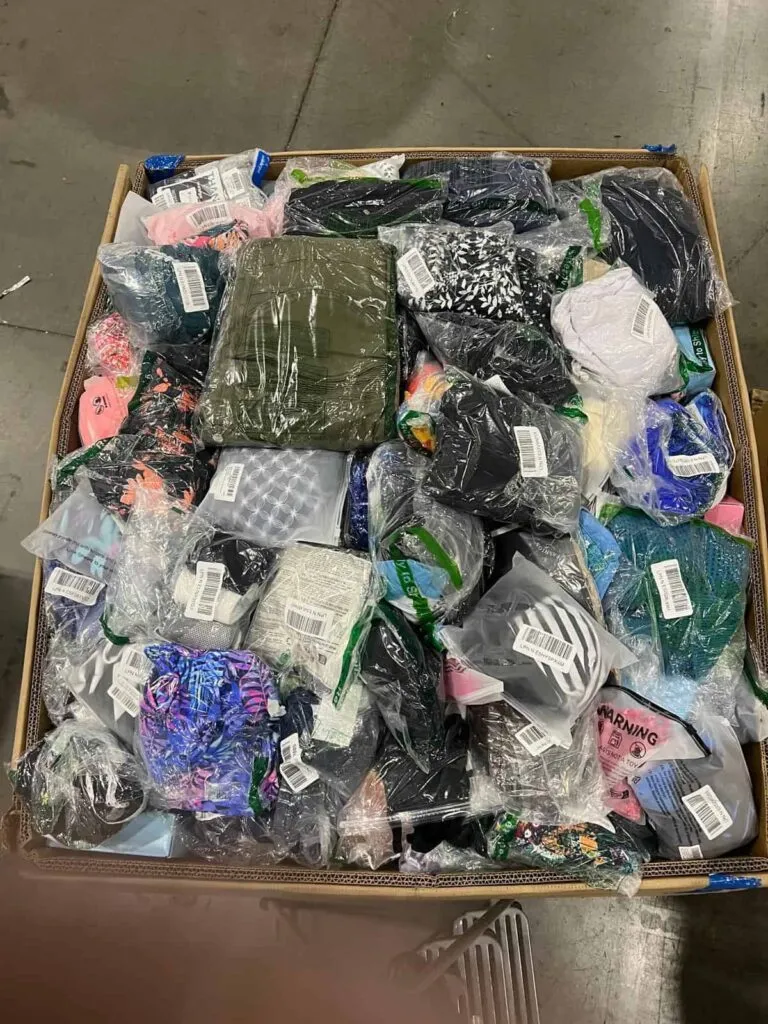
The “best” liquidation pallet to resell is the one that matches how you already sell, the space you have, and the work you are willing to do — not a universal hot category. Clothing, shoes and home goods are the three lots new and growing resellers ask about most, and they behave very differently once you cut the wrap. This guide compares those categories on work, channels, typical costs and fit, without promising profit. For a deeper clothing workflow, use our dedicated guide to choosing and reselling clothing pallets. For how lots are graded, see returns vs shelf pulls vs overstock.
There is no single most profitable pallet
Profit, when it happens, comes from a spread: what you can sell the goods for, minus landed cost, fees, leftovers and your hours. A clothing gaylord that looks cheap per piece can eat a weekend of sorting. A home-goods pallet can fill a van before you have listed ten items. A shoe pallet with a messy size run can stall if you only sell a narrow range. The useful question is not “what makes the most money?” It is “what can I process and sell, in my channel, at a landed cost I can defend?” If you do not yet have a channel, read how to start a reselling business with liquidation pallets before you buy a lot because a category is popular.
Clothing pallets
Clothing pallets and apparel truckloads are popular because the goods are familiar, relatively light, and can be sold in many places: bin stores, flea markets, Poshmark, eBay, Facebook Marketplace, live selling, and small retail or consignment racks. Returns, shelf pulls and overstock all show up in this category, packed as boxed cases, mixed gaylords, or full trailers.
The work is sorting, not heavy lifting: seams, zippers, underarms, odors, stains, size tickets and care labels, then piles you can actually sell. Cost per sellable piece matters more than the piece count on the listing. In our November 2026 catalog, single clothing pallets often sat in the mid-hundreds of dollars; apparel truckloads were a different scale. Those prices change; check live listings and run the math in the clothing guide rather than copying a number from this paragraph.
Clothing suits you if you like (or can at least tolerate) a processing line, have a hanging or folding system, and already know where you will put a size and brand mix you cannot fully control. It is a weaker fit if you have no space to sort, no patience for garments that need a clean, or a plan that depends on only one brand. Brand names in our listings describe the type of goods; we are not an authorized retailer of those brands, and you should not advertise yourself as one either.
Kids’ apparel and anything with drawstrings, small parts or sleepwear rules needs extra care. Follow care labels, and check recalls before you resell children’s items.
Shoe pallets
Shoe pallets can include athletic, casual, kids’, and women’s or men’s footwear from store returns and overstock. Some lots are mixed; some lean toward one style. In our November 2026 catalog, single shoe pallets were listed roughly in the mid-hundreds to about $1,000, with shoe truckloads much higher. Again, treat that as a snapshot.
The work is different from clothing. You are matching pairs, checking size runs, inspecting soles, insoles, box condition and obvious wear, and deciding what is a complete, honest pair vs a leftover single. Untested returns can include worn shoes, missing mates, or boxes that do not match the pair inside. Overstock and cleaner lots tend to be more consistent, at a higher cost.
Shoes sell well in the same channels as clothing, with a few twists. Size is everything: a pallet skewed away from common sizes in your market will sit. Online listings need accurate measurements and photos of flaws. Locally, people want to try shoes on, so a bin store or a weekend table can move pairs that are harder to sell by mail. Do not list a used or return pair as new. As with clothing, brand names describe the goods; Liquidation Pallet Co is independent and not affiliated with those brands.
Shoes suit a seller who is organized, who will check every pair, and who has a channel that can absorb a mixed size run. They are a poor first pallet if you were hoping to flip only one hyped model. That is not what a liquidation shoe lot is built to do.
Home goods and general merchandise
Home goods usually arrive as part of a general merchandise pallet or a more specific home-and-kitchen or housewares lot: small appliances, kitchenware, décor, storage, bedding, or a mix. Some pallets are relatively clean overstock or shelf pulls; many, especially customer return and online-retailer return loads, are untested and mixed. Read what to expect from Amazon return pallets if that is the stream you are considering.
The appeal is variety. A bin store or a general online account can turn a blender, a set of towels and a seasonal decoration from the same pallet. The drawback is bulk and testing. Boxes are heavier and more awkward than a gaylord of apparel. Anything with a plug, a heating element, a motor or a glass carafe has to be tested before you describe it as working. Missing parts are common in returns — a lid, a remote, a power cord. You also need a plan for items that are too large for your shelf or too cheap to justify outbound shipping.
In our current catalog, many general-merchandise singles sit in the $200–$700 range, with a midpoint around the mid-hundreds, and some specialty or bulky lots priced higher. Freight of $150 per order to the contiguous U.S. is a bigger percentage of a $350 pallet than of a $900 one, so landed-cost math matters here. See how much a liquidation pallet costs.
Home goods suit sellers with a van or a freight-friendly space, a testing outlet, and a channel that can hold mixed household inventory — especially bin stores. They are a harder first buy if you live in a small apartment and can only ship small parcels.
A quick comparison
| Category | Typical work | Often fits | Watch-outs |
|---|---|---|---|
| Clothing | Sort, inspect, clean, size and price by piece | Bin stores, online closets, live selling, racks | Time, unsellable garments, brand-mix uncertainty |
| Shoes | Match pairs, check sizes, inspect wear and boxes | Footwear-friendly bins, local try-on, online listings | Odd size runs, missing mates, used returns |
| Home goods / general merchandise | Unload bulky boxes, test electrics, find missing parts | Bin stores, mixed online accounts, local pickup | Weight, testing time, items that do not ship cheaply |
None of these rows is “better.” A clothing seller with a sorting table will usually beat a clothing novice on the same pallet. A bin store will often prefer mixed general merchandise over a narrow shoe size run. Match the row to your operation.
Other categories worth a mention
Tools and electronics can be strong for people who already know how to test and price those goods — and expensive mistakes for everyone else. Tool pallets often cost more than a mixed clothing lot, and cordless batteries need careful handling. Electronics pallets are typically untested returns; test them, describe them honestly, and stay away from anything you cannot evaluate safely. They belong on your shortlist only if the skill is already there.
If you want a low-cost look at a source before you commit to a full pallet in any of these categories, start with a mystery box or small lot.
Match the category to your channel
A few pairings that tend to make sense, as starting points rather than rules:
- Bin store or flea market: mixed general merchandise, unmanifested clothing, or a shoe lot with a broad size run.
- Online clothing or shoe seller: a category-specific, preferably manifested or at least well-described apparel or footwear pallet, not a fully mixed “everything” load.
- Local Marketplace or will-call seller: home goods and bulky items that are expensive to ship but easy for a buyer to collect.
- You are still testing: one category, one modest pallet, one channel. Do not buy a truckload to “find out.”
Wherever you sell, stay inside the law: sales tax where it applies, accurate listings, and recall checks on children’s goods, batteries and anything with a safety history.
A sensible first buy
Pick the category you already understand or can process with the space you have. Read the listing through. Run a landed-cost estimate that includes $150 flat freight to the contiguous U.S. or the real cost of a Miami pickup. Assume leftovers. Credit and debit cards are accepted on all orders, and sales are final except for a wrong lot, a shortage, or freight damage reported within 48 hours with photos.
Then browse the live lots: clothing, shoes, general merchandise, or the full liquidation pallet catalog. Questions about a specific pallet? Call (305) 792-8432 or contact our team.
Frequently asked questions
What are the best pallets to resell for profit?
The best pallet is the one that fits your sales channel, space and willingness to process the goods. Clothing, shoes and home goods can all work; none of them is guaranteed profit. Buy the category you can actually sell through, at a landed cost you have run conservatively.
Are clothing pallets more profitable than home goods?
Not automatically. Clothing is lighter and familiar but takes a lot of sort time. Home goods can sell quickly in a bin store but are bulkier and often need testing. Compare landed cost and hours, not category reputation.
Are shoe pallets a good place to start?
They can be if you will check every pair and can sell a mixed size run. They are a weak start if you only want one hyped style or you do not want to deal with missing mates and worn returns.
Can I choose the brands, sizes or items on a pallet?
Only to the extent the listing or an accurate manifest describes them. Mixed liquidation lots are not custom orders. Brand names describe the type of goods; we are not an authorized dealer of those brands.
How much do these pallets cost?
In our November 2026 catalog, many single clothing, shoe and general-merchandise pallets were listed in the low-to-mid hundreds of dollars, with some lots higher and truckloads much higher. See our pallet cost guide and check live prices, which change as inventory turns.
What is your return policy if a pallet is a poor mix?
Sales are final and lots are sold as-is. A mix you hoped would be different is not grounds for a return. We review a wrong lot, a shortage, or freight damage reported within 48 hours with photos, as described in our refund and return policy.