
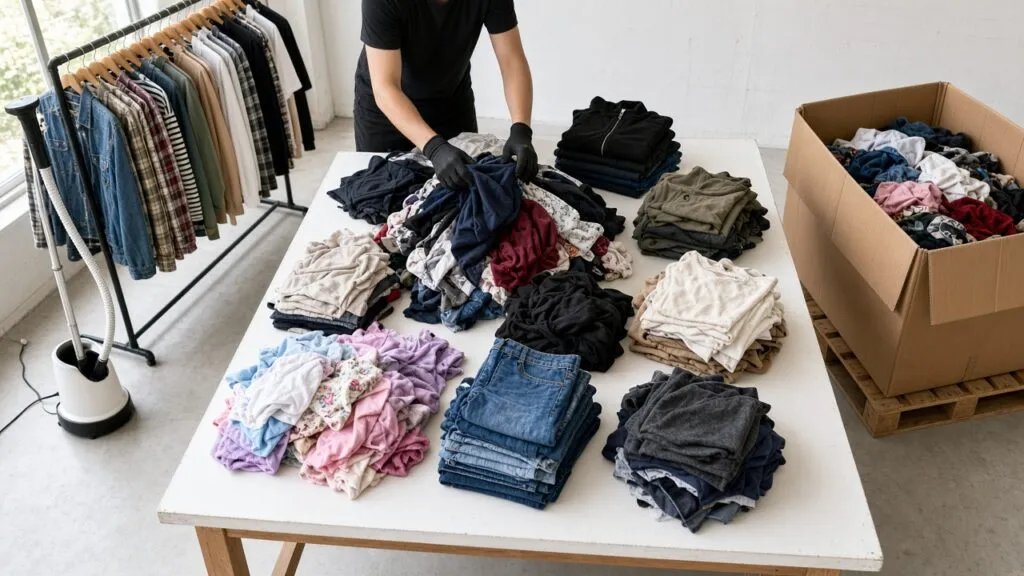
Clothing pallets are bulk lots of apparel, such as store returns, shelf pulls or overstock, sold by the pallet, the box or the truckload to resellers. Apparel is one of the most popular liquidation categories because clothing is light, easy to photograph, and sells through many channels, from bin stores to Poshmark. It also has its own pitfalls: sizing gaps, stains, missing tags and seasonal timing. This guide walks through how to choose a clothing pallet that suits your business and how to process and resell it efficiently.
What comes in a clothing pallet?
Clothing liquidation lots usually arrive in one of three formats:
- Boxed pallets – apparel packed in cartons on a pallet, sometimes sorted by type (for example jackets or kids’ clothing).
- Gaylords – large corrugated bins, often around four feet tall, filled loose with garments. Common in high-piece-count loads.
- Case packs – new overstock still in the manufacturer’s original packs, often in repeated styles and size runs.
The mix can include men’s, women’s and kids’ clothing, outerwear, activewear, denim, socks, accessories and sometimes footwear. You can see the formats we currently carry in our clothing liquidation pallets category, from single pallets such as our kids’ clothing pallet and winter jackets pallet to full loads like the 24-pallet clothing return truckload.
Step 1: Match the pallet to how you sell
The best clothing pallet is the one that fits your sales channel, not the one with the biggest retail number.
- Bin stores and flea markets sell on volume and speed. High piece counts of mixed apparel at a low cost per piece work well, and a few flawed pieces don’t hurt much.
- Online resale (Poshmark, eBay, Mercari, Depop, Facebook Marketplace) rewards recognizable labels, complete outfits, good photos and accurate measurements. Sorted lots with more mid- and upper-tier pieces are easier to work with.
- Live selling (Whatnot, TikTok Shop and similar) needs fast-moving, camera-friendly pieces and predictable condition, because surprises in front of an audience cost trust.
- Boutiques and pop-ups need curated stock with tags or near-new condition. Case-pack overstock or shelf pulls often suit them better than raw returns.
Step 2: Read the listing like a buyer, not a fan
When you look at a clothing pallet listing, check:
- Condition – returns, shelf pulls, overstock, or a mix. Returns will include tried-on items, missing tags, and some stains or damage.
- Approximate piece count – this lets you estimate cost per piece, which is the most useful number in apparel.
- Gender, age and season mix – a winter-heavy load bought in May will sit for months.
- Brand wording – brand names in liquidation listings describe the type of goods. In an unmanifested load there is no guarantee of a specific label, size or style. Liquidation Pallet Co is an independent wholesaler and is not affiliated with or an authorized retailer of the brands mentioned in listings.
- Policies – shipping, final-sale terms and how to report a freight problem.
Step 3: Do the cost-per-piece math
Apparel profit comes down to a few simple numbers. Illustrative example only: a pallet of about 450 pieces that costs $450 landed works out to $1.00 per piece. If you expect 70% of pieces to be sellable, that’s about 315 pieces, or roughly $1.43 per sellable piece. If your average sale price after fees in a bin store is $4, the gross margin before labor is around $810. Online, you might sell fewer pieces at a higher price, but you’ll spend more time per item on photos, listing and shipping.
Run your numbers with cautious assumptions first. If the deal only works at a 95% sell-through, it’s probably not a good deal.
Step 4: Set up a processing workflow
The fastest way to lose money on clothing pallets is to leave them unsorted in a garage. A simple workflow keeps stock moving:
- Unload and photograph the pallet as it arrives, including the label and shrink-wrap, in case you need to report a freight issue.
- First sort into four piles: list online, sell in bulk or by the bin, repair or clean, and recycle or donate.
- Inspect each “list online” piece for stains, holes, pilling, broken zippers, missing buttons and odors. Check seams, underarms, cuffs and collars.
- Clean and prepare: a garment steamer, lint roller, stain remover and a sweater shaver go a long way. Follow care labels.
- Measure and photograph on a consistent background or mannequin. Measurements (pit-to-pit, length, inseam, waist) reduce returns on platforms that allow them.
- Tag and store by SKU or bin location so you can find items quickly when they sell.
Step 5: Price for the channel
- Research sold listings, not asking prices, for the same type, label and condition.
- Describe condition honestly: “new with tags”, “new without tags”, “excellent used”, “flaw noted”. Honest descriptions protect your seller ratings.
- Bundle slow movers: kids’ sizes, basics and socks often sell better as bundles or by the bag.
- Move season-end stock quickly in bins or bulk lots rather than storing it for a year.
Basics like socks can be a steady seller in bins and at markets; our socks pallet is an example of a single-category apparel lot.
Step 6: Know the rules that apply to used apparel
- Children’s products: in the U.S., the Consumer Product Safety Commission (CPSC) has rules on children’s items, including drawstrings on kids’ outerwear. Check recalls at cpsc.gov before reselling children’s clothing and gear.
- Marketplace policies: each platform sets its own rules for used items, counterfeits and brand claims. Never describe an item as authentic unless you can verify it.
- Sales tax: if you resell regularly, register with your state, collect tax where required and use a resale certificate for inventory purchases where allowed.
Choosing between single clothing pallets and truckloads
A single pallet is the right starting point for most new resellers. It lets you test a category, learn your sell-through and refine your workflow without tying up space and cash. Truckloads, such as our case-pack clothing truckload or the overstock clothing truckload, make sense once you have consistent demand, a warehouse or store space, and staff to process tens of thousands of pieces.
Buying clothing pallets from Liquidation Pallet Co
We sell apparel lots by the pallet and by the truckload from Miami, Florida. A few things to know before you order:
- All lots are sold as-is and all sales are final. Report freight damage, shortages or a wrong lot within 48 hours of delivery, with photos. See our refund and return policy.
- Orders to the contiguous United States ship with a flat $150 freight charge per order. Alaska, Hawaii and U.S. military addresses are by quote. Free pickup by appointment is available at 11440 NW 122nd St Ste 700, Miami, FL 33178. Details are on our shipping policy.
- Credit and debit cards are accepted on all orders, with no minimum. After you place your order, an invoice will be sent within a few hours from sales@liquidationpalletco.com; you pay by card from that invoice.
For an overview of the category, visit our clothing liquidation pallets guide page, or start with the basics in what is a liquidation pallet?
If you are comparing apparel with shoes or home goods, see our guide to the best pallets to resell for profit. For typical prices and landed-cost math, read how much a liquidation pallet costs.
Frequently asked questions
What is a clothing pallet?
A clothing pallet is a bulk lot of apparel, usually store returns, shelf pulls or overstock, packed in boxes or gaylords on a pallet and sold to resellers at a wholesale price.
Are clothing pallets profitable?
They can be when you buy at a cost per piece that suits your channel, sort quickly and price from sold listings. Profit is not guaranteed; returns can include stained, damaged or unsellable items, so plan for that in your numbers.
Can I choose the brands or sizes in a clothing pallet?
Not in an unmanifested lot. Brand names in listings describe the general type of goods, and sizes, styles and labels vary from pallet to pallet.
Where is the best place to resell clothes from a pallet?
It depends on the mix. Bin stores and flea markets suit high-volume mixed apparel, while Poshmark, eBay, Mercari, Depop and Facebook Marketplace suit better labels and complete outfits. Many resellers use both: they list the best pieces online and sell the rest by the bin or bundle.
How should I clean clothing from a liquidation pallet?
Sort first, then follow care labels. A steamer, lint roller, stain remover and sweater shaver handle most issues. Set aside anything with odors, large stains or damage for recycling or donation.
Can I return a clothing pallet if I don’t like the contents?
No. At Liquidation Pallet Co all sales are final and lots are sold as-is. Freight damage, shortages or a wrong lot must be reported within 48 hours of delivery with photos.
For current brand-specific lots, see where to buy Lululemon pallets, FIGS scrub pallets for resale, and Skims wholesale pallets.