
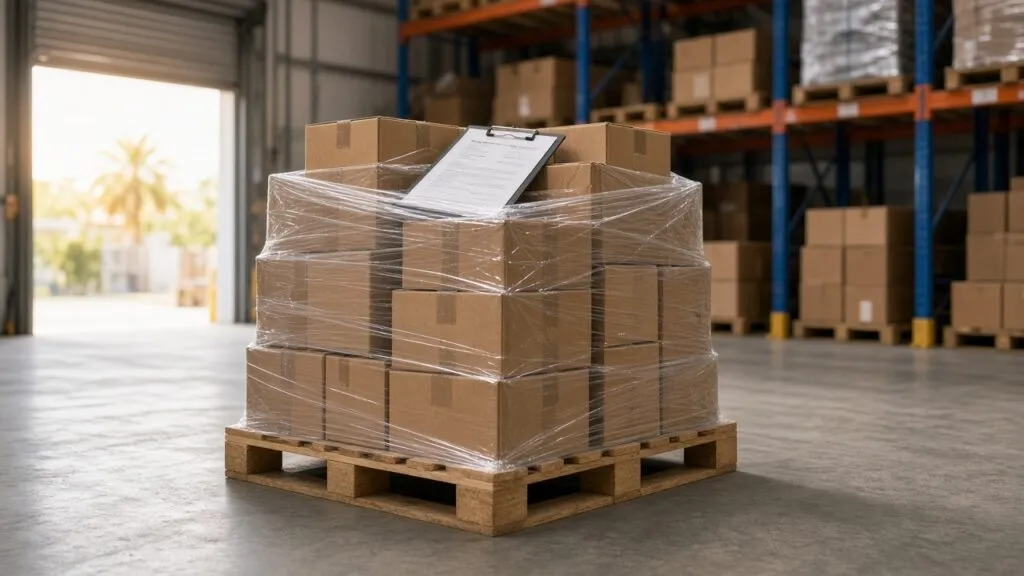
A liquidation pallet is a wooden pallet loaded with merchandise that a retailer, distributor or manufacturer no longer wants to sell through its normal channels. The goods are usually customer returns, shelf pulls or overstock, and they are sold in bulk at a fraction of their original retail value to resellers, bin stores, flea-market vendors and online sellers. This guide explains where the pallets come from, what is actually inside them, how to read a listing, and how to work out whether a pallet makes sense for your business before you spend a dollar.
Where liquidation pallets come from
Large retailers move enormous volumes of product, and a share of it always ends up somewhere it can’t easily be sold at full price. The three main sources are:
- Customer returns. Items that shoppers bought and sent back, in-store or online. Some are unopened, some were tried once, some have a fault, and some are missing parts. Retailers often can’t afford to inspect each unit, so they consolidate returns by category and sell them by the pallet.
- Shelf pulls. Products removed from the sales floor because of a reset, a packaging change, a season ending or minor shelf wear. They were never sold, but they may have stickers, dented boxes or display handling.
- Overstock. Excess inventory that never made it to the shelf, often from over-ordering, a cancelled promotion or a discontinued line. Overstock is usually the cleanest stream, but it can arrive in repeated quantities of the same item.
Retailers and their liquidation partners then sort these streams into loads. Some are sorted by category (for example clothing pallets or tool pallets), some by condition, and some are left completely mixed. If you want a deeper comparison of the three streams, read our guide to customer returns vs shelf pulls vs overstock.
What is actually inside a liquidation pallet?
A standard pallet footprint in the U.S. is about 48 by 40 inches, and a loaded liquidation pallet is commonly stacked somewhere between four and eight feet tall, shrink-wrapped to hold it together. What is on it depends on the program:
- General merchandise – a mix of household goods, small appliances, toys, home décor, kitchenware and anything else from a big-box or online retailer. See our general merchandise pallets.
- Category pallets – apparel, shoes, electronics, tools, beauty, or home and kitchen. These suit sellers who already know one niche well.
- Mystery boxes and smaller lots – a lower-cost way to see what a source looks like before committing to a full pallet. Browse mystery boxes.
- Truckloads – a full trailer, often 22 to 26 pallet spaces, for established resellers and bin stores. See liquidation truckloads.
The honest answer to “what’s inside” is that contents vary from pallet to pallet, even within the same program. Brand names in a listing describe the type of goods you can expect; they are not a promise that every item is from that brand, and an independent wholesaler like us is not an authorized retailer of those brands.
Manifested vs unmanifested pallets
A manifest is a list of the items on a pallet, usually with quantities, descriptions, UPC or item numbers and an estimated original retail value. A manifested pallet lets you research resale prices before buying, which reduces guesswork. The trade-offs: manifests are not always 100% accurate, the stated retail value is not what you will sell the items for, and manifested loads tend to cost more.
An unmanifested pallet comes without an item list. You are buying on the category, the source and the condition description. These pallets are usually cheaper per unit, and they suit buyers who resell high volumes of mixed goods, such as bin stores, where no single item makes or breaks the load.
A sensible approach for new buyers is to start with a manifested or category-specific load, learn what sells in your market, then move to unmanifested pallets once you can price mixed goods quickly.
Understanding condition descriptions
Condition is the single biggest factor in what a pallet is worth to you. Words like “returns”, “untested”, “as-is”, “shelf pull” and “overstock” each mean something different:
- Untested / as-is returns – nobody has checked whether the items work. Expect some to be perfect, some to need cleaning or missing parts, and some to be unsellable.
- Mixed-condition returns and overstock – a blend; plan for both easy sellers and items that need work.
- Shelf pulls and overstock – typically new or near-new, but packaging may be worn and quantities can be repetitive.
Every lot we sell at Liquidation Pallet Co is sold as-is, in used, customer-return or mixed condition unless the listing clearly says otherwise. Read the full product description and our refund and return policy before you order, because liquidation is a final-sale business.
How liquidation pallets are priced
Sellers price pallets in a few different ways: a flat price per pallet, a percentage of the estimated retail value on the manifest, or a price per piece or per pound for high-volume loads. None of these numbers tells you your profit on its own. What matters is how much of the load you can sell, how fast, and at what price after your costs.
Before buying any pallet, build a simple estimate:
- Total landed cost = pallet price + freight + sales tax (if your state charges it and you don’t have a resale certificate) + your time and fuel to collect or unload.
- Realistic sell-through = the share of items you expect to actually sell. Be conservative with untested returns.
- Average sale price = what similar used or open-box items actually sell for in your channel, not the original retail price. Check sold listings, not asking prices.
- Selling costs = marketplace fees, payment fees, packaging, outbound shipping, and disposal of unsellable items.
Illustrative example only: if a pallet costs you $650 landed and you expect to sell 60 items at an average of $18 after fees, your expected revenue is about $1,080, leaving roughly $430 for your labor and profit. If sell-through drops to 40 items, the same pallet only returns about $720. Running both a cautious and an optimistic version of this math before you buy is the habit that separates profitable resellers from frustrated ones.
For typical price ranges in our current catalog and landed-cost walkthroughs that include freight, see how much a liquidation pallet costs.
Freight, delivery and pickup
Pallets ship by LTL (less-than-truckload) freight or, for truckloads, by full trailer. Things to check before you order:
- Delivery address type. Commercial addresses with a loading dock are simplest. Residential delivery, liftgate service or limited-access locations can add time or cost with many carriers.
- Unloading. A full pallet can weigh several hundred pounds or more. Have a pallet jack, forklift or enough help ready.
- Inspection at delivery. Count the pallets, check the shrink-wrap, and note any visible damage on the delivery receipt before you sign. Take photos.
At Liquidation Pallet Co, orders to the contiguous United States (the lower 48 states and DC) ship with a flat-rate $150 freight charge per order at checkout. Alaska, Hawaii and U.S. military addresses are by custom freight quote. You can also choose free pickup by appointment at our Miami location, 11440 NW 122nd St Ste 700, Miami, FL 33178. Our Miami warehouse pickup guide covers hours, appointments, vehicles and inspection. Orders usually leave within 1–3 business days, and truckloads can need extra lead time. Full details are on our shipping policy page.
How to buy your first liquidation pallet: a checklist
- Decide where you will sell (bin store, flea market, eBay, Facebook Marketplace, Whatnot, a retail shelf) and pick categories that sell well there.
- Read the whole listing: source, category, condition, approximate item count, whether there is a manifest, and what is excluded.
- Check the seller’s identity: a real business address, phone number, written shipping and return policies, and clear payment terms.
- Run your landed-cost and sell-through estimate.
- Plan storage, sorting space and how you will dispose of items that can’t be sold.
- Inspect and photograph the pallet on arrival, and report freight damage, shortages or a wrong lot quickly. Our policy requires reports within 48 hours of delivery, with photos.
A note on payment: at Liquidation Pallet Co, credit and debit cards are accepted on all orders, with no minimum. After you place your order, an invoice will be sent within a few hours from sales@liquidationpalletco.com; you pay by card from that invoice. Other payment options shown at checkout remain available. If you have questions about any lot before you buy, contact our team or call (305) 792-8432.
Red flags when buying liquidation pallets
- Prices that look far too good for a “brand new, sealed” premium-brand pallet.
- No physical business address, or only a P.O. box.
- Payment that can only be made through irreversible methods with no invoice.
- Copy-pasted listings that promise specific items in an unmanifested load.
- No written shipping, return or damage-claim policy.
Liquidation can be a genuinely good source of inventory, but only when both sides are clear about what is being sold. Ask questions before you pay, and keep records of everything.
Is a liquidation pallet right for you?
Liquidation pallets work best for buyers who have a sales channel ready, space to sort, and the patience to process mixed goods. If you’re starting out, browse our full range of liquidation pallets, start with a category you understand, and read our step-by-step guide on how to start a reselling business with liquidation pallets.
Frequently asked questions
What is a liquidation pallet?
A liquidation pallet is a pallet of merchandise, usually customer returns, shelf pulls or overstock, that a retailer or distributor sells in bulk at a discount instead of selling the items individually. Resellers buy them to resell the items through their own stores or online channels.
Are liquidation pallets worth it?
They can be, if you buy categories you know, estimate your landed cost and sell-through conservatively, and have a channel to sell through. They are not guaranteed profit: untested returns can include damaged or incomplete items, so build that into your math.
What is the difference between a manifested and an unmanifested pallet?
A manifested pallet comes with a list of items, quantities and estimated retail values so you can research resale prices first. An unmanifested pallet has no item list, is usually cheaper, and suits high-volume sellers such as bin stores.
Can I return a liquidation pallet?
At Liquidation Pallet Co all sales are final and lots are sold as-is. If a pallet arrives with freight damage, is short, or is the wrong lot, report it within 48 hours of delivery with photos so we can review it.
How much does shipping a liquidation pallet cost?
Our checkout charges a flat $150 freight rate per order to the contiguous United States. Alaska, Hawaii and U.S. military addresses are quoted individually, and free pickup by appointment is available at our Miami location.
Do I need a business license to buy liquidation pallets?
You can generally buy pallets as an individual, but if you resell regularly you will likely need to register a business and collect sales tax under your state’s rules. A resale certificate may let you buy inventory without paying sales tax. Check your state’s revenue department for the exact requirements.